Refugee-Refugee Relationality: Hospitality and ‘Being With’ Refugees

In a recent piece published by the International Journal of Urban and Regional Research (IJUUR) as part of an Open Access 'Spotlight On' The Urban Refugee "Crisis", Elena Fiddian-Qasmiyeh highlights the urgency of examining refugees' positions, identities, beliefs and behaviours in relation to other groups of refugees. In essence, she argues that it is necessary to complement…

Photo Gallery: Burj el-Barajneh Camp

Photo Gallery: Burj el-Barajneh Camp, Lebanon (established in 1950) By Samar Maqusi, University College London Since the Syrian conflict erupted, Lebanon has experienced a large influx of Syrian refugees (circa 1.5 million people), as well as Palestinian refugees from Syria. Unlike Jordan and Turkey, Lebanon refused to build official refugee camps for Syrian refugees. This…

Externalising the ‘Refugee Crisis’: A Consequence of Historical Denial?

Externalising the ‘Refugee Crisis’: A Consequence of Historical Denial? By Aydan Greatrick, University College London The Global North has struggled to respond to the ‘Refugee Crisis’ in coherent and meaningful ways, in part because of policy short-termism that fails to take history seriously. If we are to find better ways of responding to displacement, we…

Poetry as a Host

Poetry as a Host By Lyndsey Stonebridge, University of East Anglia Earlier this autumn, I was fortunate enough to watch a film of a young poet recite a new poem. The poet currently lives in Palermo, Sicily, and is a student at a host school teaching young refugees and migrants. He recited his poem at…

Photo Gallery: Baqa’a Camp

Photo Gallery: Baqa'a Camp, Jordan By Samar Maqusi, University College London Baqa’a camp in Jordan is one of six emergency camps established in 1968 to shelter Palestinian refugees fleeing the 1967 Arab-Israeli war; when first established, it sheltered around 18,000 refugees, on an area of 1.4 km2; this makes it the largest camp in Jordan. Today,…

Photo Gallery: Camps, Traces and Communities in Transit

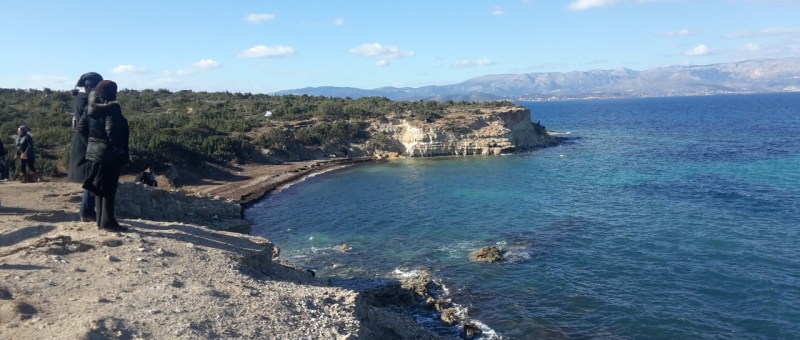
Taken during the summer of 2016, these photographs capture the dual processes of mobility and immobility experienced by thousands of refugees as they have sought safety in, from, and through a range of spaces in Turkey and Greece. From the makeshift camps near Adana, to individual, familial and collective preparations to cross the Aegean Sea…

Photo Gallery: Communities-in-Becoming

As individuals and families make their journeys across land and sea, they encounter diverse communities - communities of welcome, hostility, ambivalence - and also become parts of communities in transit, or even communities-in-becoming. These photographs were taken in and around the abandoned construction site of a five star holiday resort near Cesme/Izmir (Turkey). In the background…

Writing the Camp

Vis-à-vis or a Camp by Yousif M. Qasmiyeh, University of Oxford “To experience is to advance by navigating, to walk by traversing.” Derrida, Points..., p.373 I What makes a camp a camp? And what is the beginning of a camp if there is any? And do camps exist in order to die or exist forever?…

Refugee Youth, Conflict and Communities

In a recent piece published in The Scotsman on 20 September, Alastair Ager reflects on the global refugee crisis, and in particular on the challenges faced by refugee youth, the effects of conflict on health services, and the roles played by local communities in welcoming and supporting people who have been displaced by conflict. The following is…

Refugees Hosting Refugees

In an article published today in a special issue of Forced Migration Review on 'Local Communities: first and last providers of protection' (issue 53), Elena Fiddian-Qasmiyeh draws on her ongoing research into the experiences of local communities hosting refugees in the Middle East to interrogate the widespread assumption that the local communities hosting refugees are composed of settled and established groups of citizens.