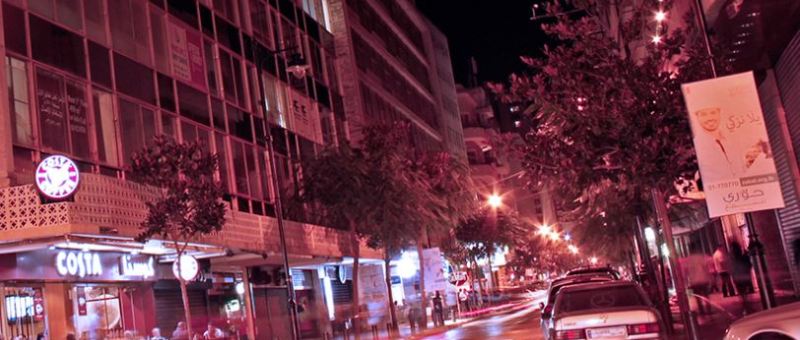
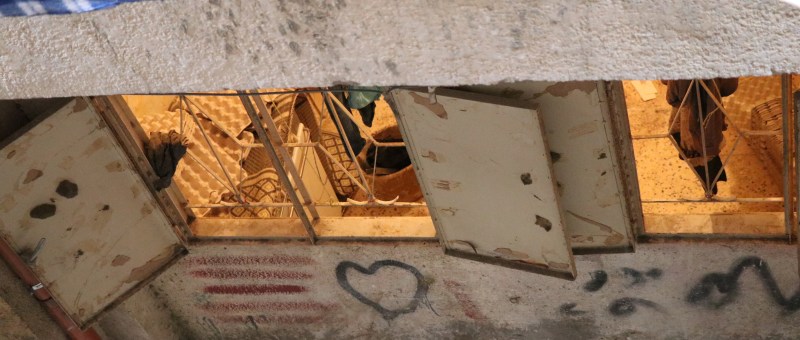
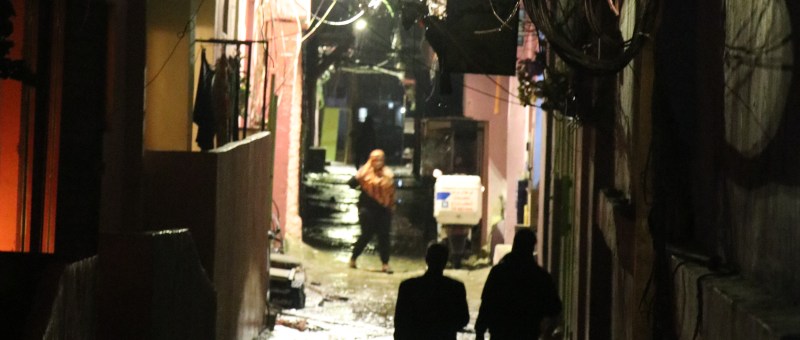
Below you can listen to two soundscapes recorded during Prof. Alastair Ager's recent fieldtrip to Hamra, a vibrant neighbourhood in Beirut which is home to a dynamic commercial and social scene in addition to many refugees from Syria. Such soundscapes offer an invaluable entry point to engage in a multi-sensory analysis of the social, economic and political…
Tag: representations of displacement series
The Multiple Faces of Representation
The Multiple Faces of Representation By Yousif M. Qasmiyeh, University of Oxford and Odile Ammann, University of Fribourg The face of the Other – under all the particular forms of expression where the Other, already in a character’s skin, plays a role – is just as much pure expression, an extradition without defense or cover,…
Leviathan’s Maw
This piece, by George Mantzios (whose artistic and creative work is completed under the pseudonym Yanni Ye) offers a visual representation of the Mediterranean 'Migration Crisis'. Yorgos' work also reflects on the role of art as a form of hosting, capable of articulating meaningful encounters that are built on 'vernacularised' art practices. The Refugee Hosts…
Thinking Through the Concept of ‘Welcoming’
In this piece, Katharine T. Weatherhead reflects on the discursive implications of the term 'welcoming' when used in refugee-related research. In particular, she asks: does the term enable nuanced engagement with displacement as a series of overlapping, relational encounters, in turn disrupting traditional representations that depict refugees as a vulnerable 'burdens', and hosts as active…
Refugees are Dialectical Beings: Part Two
Refugees are Dialectical Beings: Part Two by Yousif M. Qasmiyeh, University of Oxford and Refugee Hosts Writer in Residence To the ones who are en route, the ones whose stomachs are compasses and whose compasses are manifestos of nothing… Refugees are dialectical beings I The aridity of a camp presupposes the aridity of life.…
Invisible (at) Night: space, time and photography in a refugee camp
by Dr. Elena Fiddian-Qasmiyeh, UCL and PI of Refugee Hosts Invisible (at) night: space, time and photography in a refugee camp If our perceptions of refugees’ experiences of displacement were based on photographs produced and disseminated by the UN, NGOs and the media, we could be forgiven for assuming that refugees’ daytimes are either seemingly…
Refugees are Dialectical Beings: Part One
Refugees are Dialectical Beings: Part One by Yousif M. Qasmiyeh, University of Oxford and Refugee Hosts Writer in Residence The camp is a passing human, a book, a manuscript, an archive... Bury it; smother it with its own dust, so it might return as a holy text devoid of intentions. Writing the camp-archive I…
Call for Submissions: Write for our Representations of Displacement Series
Call for Submissions: Representations of Displacement We invite individuals or groups to submit pieces, including art, photographs, creative writing and academic research findings, for inclusion in our upcoming series on Representations of Displacement, which will run from September 1 to November 30. About the Series: This series draws on Refugee Hosts’ aim of disrupting mainstream…
Photo Gallery: Baddawi Camp
It is often assumed that refugees are vulnerable and passive people who are dependent upon the assistance provided by states, NGOs and citizens. In contrast, my on-going research is examining how established Palestinian refugees and their refugee camp homes are adapting and responding to the arrival of thousands of refugees from Syria. Amongst other things, this demonstrates the agency of refugees as both recipients and providers of support in complex displacement contexts.
You must be logged in to post a comment.