Histories and spaces of Southern-led responses to displacement by Elena Fiddian-Qasmiyeh, Refugee Hosts PI and UCL Far from passively waiting for externally provided assistance, regional organisations, states, communities, households, families and individuals across the world have been responding to displacement throughout history. The case of refugees-hosting-refugees that I have been exploring in detail through Refugee…
Category: Blog
The Localisation of Aid and Southern-led Responses to Displacement
The Localisation of Aid and Southern-led Responses to Displacement: Beyond instrumentalising local actors By Elena Fiddian-Qasmiyeh, Refugee Hosts PI and UCL Displacement is primarily a ‘Southern’ phenomenon, with around 90% of all refugees having fled from one country in the global South to another Southern state, through processes of South-South migration. It is equally the…
Turkey – Crossroads for the Displaced
The conflict in Syria has entered its seventh year. In this time, millions of refugees from Syria have travelled through - or have become stuck in - Turkey, a country that has in turn been shaped by recent political flux. From this position, refugees from Syria - and the NGOs, faith groups and agencies that seek…
Before Defining What is Local, Let’s Build the Capacities of Humanitarian Agencies
In this piece, Dr Janaka Jayawickrama and Bushra Rehman argue that the localisation of aid agenda is shaped by a discourse of global humanitarianism that is characterised by a particular, cultural relationship to power. This suggests that current discourses on localisation have largely been North-centric, often overlooking the Southern contexts and histories that shape ‘the local’…
How to Overcome Religious Prejudice among Refugees
Religious tensions between diverse refugee communities in Jordan, Turkey and Lebanon present challenges to those affected by displacement, exposing some to faith-based discrimination. In other instances, (perceived) markers of religious identity expose refugees to discrimination, both from state officials, and members of the host community too. However, as Kat Eghdamian (UCL) argues in this piece (originally…
Refugee Neighbours & Hostipitality
Accounting for the roles of local communities is a key aim of our project, and of the 'Localisation of Aid' agenda more broadly. However, as a result of the mainstream narratives that pervade the literature on conflict-induced displacement, efforts to properly engage with the local have been held back by a failure to fully recognise…
Refugee-led Humanitarianism in Lebanon’s Shatila Camp
Refugee-led humanitarian initiatives by ‘established’ Palestinian refugees in response to the arrival of ‘new’ displaced Syrians to Shatila camp raise key questions about the limitations of the humanitarian system and representations of refugees as passive victims, argues Hind Sharif, echoing and building on work published as part of Refugee Hosts. This piece, which was originally…
Sounds from Istiklal, Turkey
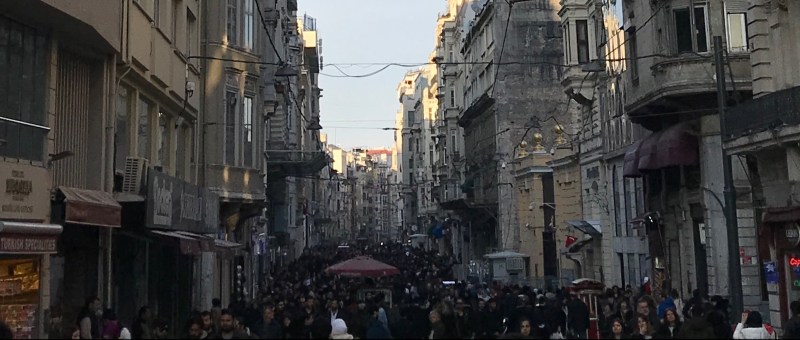
How are social processes of marginalisation and agency heard, as well as seen? Below you can listen to a recording of a refugee youth playing a melody on the busy street of Istiklal, Istanbul. Such soundscapes offer ways of analysing the social, economic and political dynamics that characterise spaces inhabited, shared and contested by and…
Learning from the Local in Greece
Making localisation work is about much more than ensuring local actors receive a greater share of the funding pie, argues Tina Mason (founder of re:viewed). In fact, the disconnect between the 'local' and the 'international' pervades all aspects of the humanitarian response: addressing this, and learning from the local, is therefore essential if localisation is to be meaningful…
Name
Name by Frances Timberlake, Refugee Women's Centre The name lands on the pavement slapped down like spilt water A person a body a name tumbling from this young boy's mouth like spilt water Like a splash from the Black Sea waters the man drowned in four months ago as the young boy sat watching with the…
You must be logged in to post a comment.